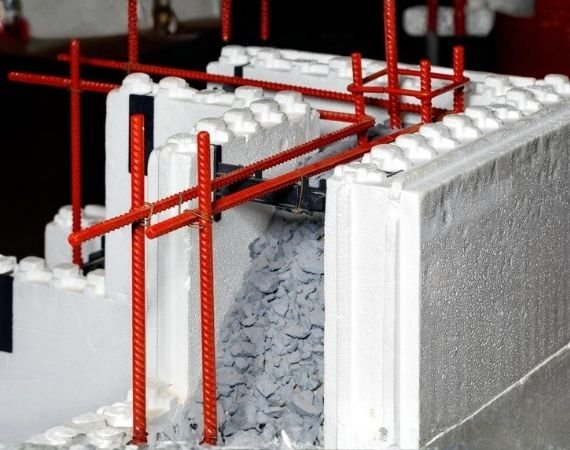
Expanded Polystyrene (EPS) is a white foam plastic material produced from solid beads of polystyrene. It is a closed-cell, rigid foam material produced from:
1- Styrene – which forms the cellular structure
2- Pentane – which is used as a blowing agent
Both styrene and pentane are hydrocarbon compounds and are obtained from petroleum and natural gas byproducts.
EPS is very lightweight with very low thermal conductivity, low moisture absorption and excellent cushioning properties.
x
S
A
W
A
R


About Us
RAWAS Al-Diyar Factory is a leading manufacturer and marketer in Saudi Arabia’s industrial and construction sectors. We specialize in EPS, thermal insulation, packaging, and stone foam products, delivering solutions that comply with Saudi Standards, Metrology, and Quality Organization requirements.
Get QuoteContact Info
-
Al-Khobar – Al-Bandariyah, Raja Tower, 3rd Floor
Dammam Industrial City 2 - 0551708270
- info@rawasintl.com
- Sunday – Thursday: 08:00 AM to 06:00 PM
Understanding Expanded Polystyrene
What is EPS?
History of EPS
The evolution of Expanded Polystyrene
In 1839, a German apothecary Eduard Simon discovered polystyrene. Although Simon was able to isolate the substance from natural resin, he did not know what he had discovered. It wasn't until 80 years later that organic chemist Hermann Staudinger, realised Simon's discovery, comprised of long chains of styrene molecules, was a plastic polymer.
In 1922, Hermann Staudinger published his theories on polymers, stating that natural rubbers were made up of long repetitive chains of monomers that gave rubber its elasticity. He went on to write that the materials manufactured by the thermal processing of styrene were similar to rubber. They were the high polymers including polystyrene.
In 1930, the scientists at BASF developed a way to commercially manufacture polystyrene in a pellet form. In 1937, the Dow Chemical company introduced polystyrene products to the U.S. market.
In 1951, BASF developed and patented Expanded Polystyrene (EPS) known as Styropor®.
In 1953, Hermann Staudinger won the Nobel Prize for Chemistry for his research.
Today, EPS is one of the most versatile and cost effective materials for both packaging and building/construction applications because of its benefits in product, performance and recycling.